
Posted by Great Lakes Fishing Podcast on 13th Mar 2026
Lake Ontario Salmon Tactics and Spring Fishing Outlook from Three Veteran Captains
Each winter, the Greater Niagara Fishing Expo brings together some of the most experienced anglers on Lake Ontario. It’s a chance for charter captains, tackle manufacturers, and everyday anglers to talk fishing, compare notes, and start thinking about the upcoming season.
At the Fish Hawk Electronics booth, host Chris Larsen sat down with three veteran captains from the western end of Lake Ontario: Captain Vince Pierleoni of Thrillseeker Sportfishing, Captain Matt Yablonsky of Wet Net Charters, and Captain Anthony Ellis of Redemption Charters.
All three captains fish out of the Olcott and Wilson area of New York and spend hundreds of days each season chasing king salmon, coho salmon, steelhead, brown trout, and lake trout. Their conversation covered everything from last season’s unusual fishing patterns to trolling setups, leader lengths, spoon sizes, and how to simplify your spread to catch more fish.
Here are some of the key takeaways from their discussion.
A Unique Season on Lake Ontario
One of the biggest talking points among Lake Ontario captains last season was the incredible coho salmon fishing early in the year.
According to Captain Matt Yablonsky, the coho bite was unlike anything he had seen before.
“We had fish to catch all year. Maybe some different species or different amounts of species than we normally catch, but we had a good salmon bite early and then the coho showed up in numbers I’d never seen before.”
Instead of just a few incidental coho mixed in with king salmon, entire trolling spreads were dedicated to them.
“I ended up running a whole coho spread—downriggers, divers, long lines—because customers wanted to keep catching them. They were fun and they’re great to eat.”
Later in the summer, the king salmon bite picked up as fish moved deeper in the water column.
“We had good king fishing in July. Some days they were 100 to 120 feet down, but when you got your gear down there, they were eating.”
From early coho to mid-summer kings and a strong brown trout bite, Yablonsky summed it up simply:
“I thought it was a pretty darn good season.”
Why Alewife Abundance Matters
Lake Ontario’s salmon fishery is built on one critical food source: alewives.
The abundance of alewives last year may play a major role in the size of salmon this season.
Captain Vince Pierleoni pointed out that the huge bait population helped young salmon grow quickly.
“We had such a big crop of alewives that it made feeding easy for the salmon. Once they took advantage of that, things started to normalize.”
He also explained why anglers saw large numbers of dead alewives floating in the spring.
“It’s very common in the Great Lakes to have alewives explode like that. When they get too dense, some of the weaker ones die off.”
Despite concerns from some anglers, Pierleoni believes the bait population is actually a positive sign for the fishery.
“We’re hoping those younger Chinooks got a big bump from that bait and we’ll see some extra big fish this year.”
Yablonsky agreed that strong bait numbers often translate to healthier fish.
“When the baitfish and young salmon go into winter full and healthy with fat reserves, it definitely helps them survive into spring.”
Leader Lengths and Trolling Setup
One of the most common questions anglers ask charter captains is about leader lengths and trolling setups.
Yablonsky keeps things fairly simple when running spoons behind his downriggers.
“I run 15-pound test for my spoons with about eight feet of leader. Then I run 20-pound fluorocarbon behind that.”
He also varies how far his lures trail behind the downrigger ball.
“I usually start the morning with one at 20 feet, one at 25, and one at 30 feet. That gives the fish a few different looks.”
Pierleoni takes a similar approach but adapts based on water clarity.
“The fish will tell you what they want. In murky water we’ll run our leads shorter because the fish are already coming toward the weight to investigate.”
He emphasized that conditions often determine how much separation is needed.
“If the water is dirty, sometimes you can cheat the lure closer to the weight and get more bites.”
Both captains agree that paying attention to how fish respond is the key.
Why Simplicity Catches More Fish
One of the most valuable lessons from the discussion was how keeping things simple can dramatically improve success.
Captain Anthony Ellis often sees anglers try to run overly complicated trolling spreads.
“They watch us come back to the dock with fish and they see spoons, flasher flies and meat rigs all hanging on our rods. Then they try to run all of it at once and struggle.”
Instead, Ellis recommends focusing on one technique first.
“Just run one thing. Run spoons or run flasher flies or run meat. When you start catching fish on that, then add something else.”
His approach helps eliminate variables that confuse anglers.
“If you’re not catching fish on all of that tackle, something’s missing. Simplify it and figure out what works.”
Pierleoni echoed that advice, explaining that many anglers try to run spreads that are too big.
“Some really good small-boat anglers don’t even run long lines because they’d rather perfect the two downriggers they have in the water.”
The bottom line?
Master a simple setup first before expanding your spread.
Choosing the Right Spoon Size
Another topic that surprised many anglers was the effectiveness of magnum spoons last season.
Yablonsky said larger spoons produced even for smaller fish.
“Most of my fish wanted magnum spoons almost all year long. Even smaller fish were chasing the big spoons.”
The reason likely comes back to the baitfish size.
“There were a lot of mature alewives out there and the salmon were used to eating those bigger baitfish.”
Pierleoni said matching the hatch was critical.
“The fish we’re targeting are larger predators, and they were feeding on big alewives. That’s why the magnum spoons worked.”
However, spoon size can change dramatically during the season.
When fishing pressure increases, salmon can become selective.
“The easy ones are gone,” Pierleoni said. “The rest of them are bigger and choosier.”
That’s when downsizing lures can make a difference.
Fishing Late Season on Lake Ontario
While many anglers pull their boats out of the water by early fall, charter captains often fish into October.
That time of year can produce excellent fishing.
Yablonsky described how warm surface water creates strong temperature breaks offshore.
“The lake is as warm as it’s going to get that time of year, and you’ll see those breaks where the water suddenly cools. The fish will hold on that break.”
Those breaks concentrate baitfish and predators alike.
“We get beautiful steelhead, immature kings and big healthy fish hanging on those temperature breaks.”
Pierleoni explained that river flow also plays a role.
“That river water can extend out 30 miles or more, and the fish will travel those temperature breaks like a highway.”
When stable weather lines everything up, fishing can be spectacular.
“If you get stable weather in early fall,” he said, “it can be lights-out fishing.”
The Importance of Adapting to Conditions
One recurring theme throughout the discussion was adaptability.
Lake Ontario conditions can change quickly, especially in spring.
Ellis believes anglers need to stay flexible.
“Right out of the gate you’re going to have to adapt. You’re going to have warm pockets of water one day and they might be gone the next.”
Spring weather patterns can shift fish dramatically.
“Until we get stable warm weather in early summer, you’re going to have to work for fish.”
Pierleoni added that wind plays a major role.
“A big northeaster early in the season can completely disrupt everything.”
But those same weather systems can also help.
“Sometimes that cold water push can actually bring fish back to the area and extend a bite.”
Understanding how temperature, bait, and wind interact is essential for consistent success.
Where to Spend Your Fishing Budget
With anglers walking around the Niagara Fishing Expo ready to buy tackle, Larsen asked the captains how they would spend $200.
Pierleoni suggested focusing on the type of fishing you enjoy most.
“If you fish early spring, you could easily spend that money on new stickbaits for shallow water fishing.”
For summer anglers, he recommended upgrading spoon selections.
“We’re seeing a big trend toward UV spoons. If you haven’t updated your tackle in a while, that’s a good place to spend money.”
Ellis kept his advice even simpler.
“Don’t follow someone else’s program. Spend your money improving the program that already works for you.”
Confidence in your tackle matters more than constantly chasing the newest trend.
Looking Ahead to the Next Season
All three captains are optimistic about the upcoming Lake Ontario season.
Strong bait numbers, healthy fish, and improving habitat are positive signs.
Pierleoni believes anglers could see some impressive salmon.
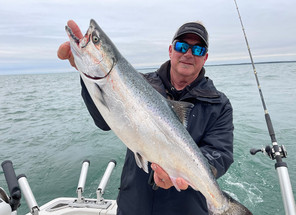
“We saw some non-mature Chinooks last fall that anybody would be proud to hold up for a picture.”
Yablonsky agrees that the king salmon fishery looks promising.
“We had a lot of healthy one-year-olds and two-year-olds last year. That should translate into a really good king season.”
For anglers planning trips to the western end of Lake Ontario, that’s encouraging news.
Final Thoughts
Fishing Lake Ontario successfully requires more than just good equipment. It requires understanding bait patterns, temperature breaks, seasonal changes, and how fish react to pressure.
But perhaps the most valuable advice from these experienced captains is this:
Keep things simple and adapt to what the fish are telling you.
Whether you’re trolling spoons for spring browns, chasing coho in early summer, or targeting big kings offshore, the principles remain the same.
Pay attention to the water, watch your electronics, and adjust your program accordingly.
And if the predictions from these captains are correct, anglers could be in for another excellent season on Lake Ontario.