
Posted by Great Lakes Fishing Podcast on 8th Oct 2026
Lake Erie Lake Trout Fishing with Captain Pete Alex | Spring & Fall Tactics
Ask just about any Great Lakes angler what comes to mind when they think about Lake Erie, and the answer is almost always the same: walleye.
And for good reason. Erie has become one of the most productive walleye fisheries in North America, drawing anglers from across the country to experience its remarkable fishing.
But Captain Pete Alex of Vision Quest Sport Fishing sees something else when he looks across those waters. He sees a fishery that many anglers barely think about. One that produces fish pushing 30 pounds, offers some incredible action in the spring and fall, and has a history that Pete himself helped write.
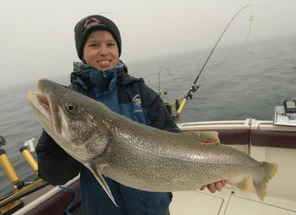
He's talking about Lake Erie lake trout.
During a conversation at the Greater Niagara Fishing & Outdoor Expo, Pete shared the story of a fishery that has quietly developed into one of Lake Erie's best-kept secrets. And perhaps the most interesting part of that story is how much time he spent figuring it out when almost nobody else was paying attention.
Finding Fish Nobody Was Looking For
Back in the 1980s, lake trout weren't exactly a hot topic among Lake Erie anglers. The native species had been devastated during the middle of the 20th century, with sea lamprey predation and changes to the lake's ecosystem contributing to its decline.
Restoration efforts were underway, but there wasn't much of an established recreational fishery. Most anglers were focused on other species, and relatively little was known about where Erie lake trout traveled throughout the year.
Pete saw an opportunity.
Rather than waiting for someone else to figure things out, he started putting in the time himself. That meant long days on the water, plenty of fuel burned, and a lot of trial and error. He studied structure, followed seasonal movements, and gradually began piecing together a picture of where lake trout went and when they could be caught.
It wasn't something that happened overnight.
Over the years, Pete developed an understanding of the fishery that few other captains possessed. He learned where fish staged in the spring, where they spent the warmer months, and where they returned when fall brought colder water.
Today, anglers can take advantage of patterns that took years of exploration to uncover.
A Recovery Story Beneath the Surface
Lake trout are native to Lake Erie, but their recovery has required considerable help.
Stocking programs have played a major role, with approximately 150,000 to 200,000 lake trout stocked annually for several years. Pennsylvania waters have been particularly important to the fishery, especially along the eastern shoreline toward New York.
But Pete believes another change beneath the surface has helped sustain those fish: the arrival of gobies.
While gobies are an invasive species and have created problems throughout the Great Lakes, they've also become an important food source for lake trout. Pete has cleaned spring fish with stomachs packed full of gobies.
With traditional forage such as smelt becoming less abundant, gobies have provided lake trout with another readily available meal.
It's one of the fascinating contradictions of Great Lakes fishing. An invasive species that has disrupted the ecosystem has also become a significant part of the food chain supporting a recovering native predator.
Spring Fishing Is a Search
For Pete, the lake trout season really comes alive in late April and May.
This is when fish begin showing up around the structure and drop-offs along Pennsylvania's eastern Lake Erie shoreline. Some can be found inside 50 feet of water, while others hold along deeper breaks in 48 to 80 feet.
The challenge isn't necessarily getting lake trout to bite. It's finding them.
These fish move, and yesterday's productive location isn't guaranteed to produce again tomorrow. Pete spends considerable time covering water, watching his electronics, and searching for the right combination of structure and fish.
Once he finds them, however, the fishing can be outstanding.
The average lake trout runs roughly 8 to 14 pounds, but fish exceeding 20 pounds are a legitimate possibility. Pete has encountered fish in the upper-20-pound class, the kind of lake trout that can turn an ordinary morning into a memorable one.
His spring trolling program combines leadcore lines pulled behind planer boards with downriggers and wire divers. Dodgers paired with spinning attractors, including Dreamweaver Whirligigs and Spin-N-Glows, are dependable producers. Traditional cowbell rigs also hold a key place in his spread as well.
When Everybody Else Goes Home
As good as spring fishing can be, fall is when Pete's enthusiasm for Lake Erie lake trout really comes through.
By the middle of October, many Great Lakes anglers are finished for the season. Boats are being winterized, hunting seasons are underway, and cold weather is becoming a regular part of the forecast.
Pete is still fishing.
As water temperatures drop, lake trout move toward shallow rocky areas associated with spawning. Suddenly, fish that spent much of the summer in deeper water can be found in just 18 to 30 feet.
And when they're concentrated, the action can be remarkable.
Pete has experienced fall outings producing 30 to 40 lake trout, sometimes with smallmouth bass, steelhead, or an occasional walleye mixed into the catch.
Fishing that shallow requires a different approach. Shorter sections of leadcore, monofilament Dipsy divers, and planer boards help spread presentations away from the boat. Many of the same dodgers and attractors that work in spring remain productive.
The shallow, cold water also makes fall an appealing time to practice catch-and-release fishing, particularly compared with bringing fish up from substantial summer depths.
For Pete, the opportunity is worth keeping the boat in the water until nearly December.
Two Great Lakes, One Fishing Calendar
One advantage Pete enjoys is the ability to operate on both Lake Erie and Lake Ontario.
Through Vision Quest Sport Fishing, he can follow productive fisheries as the seasons change rather than relying on one species or one stretch of water.
During late April and May, he might be chasing king salmon out of Wilson, New York, on Lake Ontario or targeting lake trout on Erie. When summer arrives, his attention shifts heavily toward Lake Erie's tremendous walleye fishing, with steelhead occasionally entering the picture.
As September arrives, Lake Ontario salmon become a priority again before the fall lake trout bite develops on Erie.
It's a schedule built around decades of experience and an understanding that great fishing opportunities don't always follow the calendar anglers expect.
More Than a Day of Catching Fish
There's another reason anglers seek out Captain Pete Alex, and it goes beyond the number of fish that end up in the net.
Pete enjoys teaching.
Spend a day aboard his boat, and you're likely to learn why he's fishing a particular location, what he's seeing on his electronics, and why he's making changes to the trolling spread.
He doesn't simply want customers to watch rods bend. He wants them to understand what's happening.
That willingness to share knowledge is especially valuable for anglers trying to become more successful on their own boats.
Consider the money involved in learning a Great Lakes fishery. Fuel, tackle, electronics, boat maintenance, and countless hours of experimentation add up quickly. A day with an experienced charter captain can dramatically shorten that learning curve.
Sometimes the most valuable thing you bring home from a fishing trip isn't a photograph of a trophy fish. It's the knowledge that helps you catch more fish for years to come.
The Fishery Hiding in Plain Sight
Lake Erie probably isn't going to lose its reputation as a walleye destination anytime soon. Nor should it. The fishing is simply too good.
But there's something special about a fishery that remains largely overlooked despite producing big fish and tremendous action.
Captain Pete Alex recognized that potential decades ago. He invested the time, learned the seasonal patterns, and helped demonstrate what Lake Erie's lake trout fishery could become.
Today, the opportunity is there for anglers willing to try something different.
When spring arrives and lake trout begin gathering along the breaks, or when November brings big fish into shallow rocky water, there's another side of Lake Erie waiting to be discovered.
And while everybody else is talking about walleye, Pete Alex might just be out there catching lake trout.
Learn More About Vision Quest Sport Fishing
To learn more about fishing with Captain Pete Alex, visit visionquestfishing.com. You can also find his instructional fishing videos on YouTube.
For more Great Lakes fishing stories, techniques, and interviews with experienced captains, visit FishHawkElectronics.com and subscribe to the Great Lakes Fishing Podcast.