
Posted by Great Lakes Fishing Podcast on 28th Jun 2026
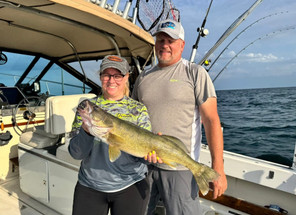
Eastern Basin Lake Erie Walleye Fishing Tactics from Dunkirk, NY with Dream Catcher Sportfishing
The Eastern Basin of Lake Erie has quietly become one of the most productive walleye fisheries anywhere in North America—and anglers fishing out of Dunkirk are right in the middle of it.
During a conversation at the Greater Niagara Fishing Expo, Jim and Diane Steel of Dream Catcher Sportfishing shared how they approach this fishery—from trolling spreads and lure choices to why downspeed and temperature data from Fish Hawk Electronics systems play such a central role in their program.
If you're planning a trip to the Eastern Basin—or simply want to improve your Great Lakes trolling success—these insights can help you catch more walleyes with a repeatable system.
Why Dunkirk Is a Perfect Eastern Basin Starting Point
One of the biggest advantages of fishing the Dunkirk area is versatility.
Within minutes of leaving the harbor, anglers can access:
- shallow shoreline structure
- mid-depth transition zones
- deep open-water trolling areas
- multi-species opportunities, including brown trout, steelhead, smallmouth bass, and lake trout
That flexibility allows trolling anglers to adapt to wind, current, and seasonal movement without long runs.
Another overlooked advantage? Dunkirk is a destination port. Lodging, fuel, fish cleaning stations, restaurants, and the nearby wine trail make it a comfortable trip for families—not just hardcore anglers. That accessibility makes the port especially attractive for anglers planning their first Eastern Basin experience.
But the real story is the fishery itself.
The Eastern Basin Walleye Fishery Is Exceptional Right Now
By almost every measure, the current Lake Erie walleye population is among the strongest anglers have seen in decades.
Strong year classes continue to stack up. According to regional observations and conversations with fisheries biologists referenced in the discussion, forage availability remains healthy thanks to:
- gobies
- emerald shiners
- cisco
That combination supports both numbers and consistency.
One of the most surprising elements for visiting anglers is the depth range. Walleyes in this region are commonly caught:
- in 35 feet of water
- suspended over 120 feet
- or anywhere in between
For anglers used to inland walleye behavior, this open-water trolling pattern can feel completely different—but once understood, it becomes incredibly predictable.
Building a Productive Eastern Basin Trolling Spread
Jim and Diane run a classic but highly efficient Great Lakes trolling system designed for flexibility and coverage.
Their typical spread includes:
- 3–4 planer boards per side
- 2 dipsy divers per side
- 2 downriggers total
That can put as many as 14–15 rods in the water when conditions allow.
Each rod type serves a purpose:
Planer boards
Carry leadcore presentations away from the boat and cover upper-water-column fish.
Dipsy divers
Target mid-depth suspended walleyes.
Downriggers
Dial in exact temperature zones and run spoons precisely where fish are feeding.
Together, the system creates a layered trolling approach that keeps baits in front of fish regardless of where they’re positioned in the column.
Leadcore, Line Choices, and Reel Setup Tips
Consistency starts with rigging.
For their planer board program, the Steels rely heavily on leadcore. Visibility matters—not just for detecting bites, but also for managing complex multi-rod spreads in waves and wind.
Typical setups include:
- 2–6 color leadcore on 30-series reels
- 7–10 color leadcore on 45-series reels
- braid on dipsy divers
- 20-pound mono on downriggers
An especially smart tip they shared is reverse-spooling reels so backing fills the reel completely. That ensures maximum efficiency when deploying leadcore lengths.
Small rigging details like these make a big difference across a full season.
Why Stickbaits and Spoons Beat Worm Harnesses Here
One of the biggest surprises for many anglers is how rarely worm harnesses are used in this program.
Instead, the Steels rely primarily on:
- stickbaits
- crankbaits
- spoons
In fact, they’ve gone years without needing live bait in their spread.
There are several advantages:
- less maintenance onboard
- faster deployment
- easier repeatability
- better performance across changing depths
Stickbaits dominate planer boards, while spoons excel on dipsies and downriggers.
Typical productive sizes range from:
- 2.5 inches
- up to about 5 inches
Even trophy-class walleyes regularly strike smaller profiles.
Matching the hatch matters more than upsizing.
Color Selection: Confidence Matters More Than Trends
Color discussions always come up when targeting walleyes—but experienced charter operators tend to simplify things.
Seasonal favorites often include:
- purple later in the year
- orange under certain conditions
- natural baitfish tones throughout the season
However, one of the best reminders from this conversation was simple:
Color often catches anglers more than fish.
Instead, focus on:
- bait profile
- speed control
- temperature zone placement
Those factors consistently outperform color changes alone.
In the deep open water of the Eastern Basin, current becomes the primary structure.
That’s why monitoring downspeed and temperature at the lure is essential.
Rather than relying on surface GPS speed, the Steels begin each trip by dropping a Fish Hawk probe and establishing a baseline trolling speed at depth.
Their starting point?
2.2 mph downspeed
From there, adjustments are made based on rod performance.
For example:
- outside rods firing during turns = increase speed
- inside rods firing = slow down
Sometimes simply adding more turns—not changing throttle—can trigger strikes.
These subtle adjustments imitate fleeing prey and convert followers into biters.
Understanding “Structure” in Open Water
Unlike shoreline-driven fisheries, deep Lake Erie trolling often happens over featureless bottoms.
In these areas:
current becomes structure
Understanding how lures behave within that moving water column is critical.
That’s why having a Fish Hawk matters. It measures:
- downspeed
- temperature
- current
can dramatically increase catch rates.
When anglers control those variables, they gain consistency—even when fish are scattered across open basins.
Repeatability Is the Most Important Skill New Anglers Can Learn
One of the most valuable lessons shared during this conversation applies everywhere—not just Lake Erie.
Repeat what works.
If a dipsy fires at a certain depth:
Write it down.
If a turn produces strikes:
Note the speed change.
If a lure produces multiple bites:
Duplicate it immediately.
Tracking these patterns transforms random success into predictable fishing.
Simple systems like:
- labeled storage boxes
- organized lure rotation trays
- logbooks or phone notes
help anglers recreate productive setups trip after trip.
Seasonal Timing for Eastern Basin Walleyes
One of the most surprising aspects of fishing out of Dunkirk, New York is how consistent the seasonal program can be.
Rather than drastically changing locations throughout the year, anglers often run similar patterns from early season through fall.
Typical seasonal overview:
Spring
Cold water transitions begin. Fish become increasingly active as temperatures stabilize.
Early summer
Migration fish begin mixing with resident populations.
July–August
Peak consistency and numbers.
September
Outstanding fishing continues, though wind limits access more frequently.
October–November
Fish remain available—but conditions become the biggest challenge.
If anglers can safely reach them, the walleyes are still there.
Simple Gear Advice That Pays Off Immediately
When asked what anglers should buy first with a limited budget, the Steels didn’t suggest complicated electronics or expensive upgrades.
Instead:
Start with planer boards and dipsies.
Then improve storage and organization.
And always buy two of productive lures—not one.
Why?
Because once you lose the only productive bait of the day, momentum disappears quickly.
Investing in mid-grade rods and reels instead of entry-level gear also pays long-term dividends through durability and repairability.
The Real Secret to Eastern Basin Success
At its core, the Eastern Basin fishery rewards anglers who pay attention to details.
Success comes from:
- controlling downspeed
- monitoring temperature zones
- matching bait profiles
- repeating productive setups
- adapting during turns
- staying organized
Put those pieces together and the results can be remarkable.
Right now, Lake Erie is producing some of the best walleye fishing many anglers have ever seen—and with tools that reveal what’s happening beneath the boat, anglers can take full advantage of this historic fishery.